As part of our commitment to transparency in Cardano's decentralized governance, we're sharing progress on our Intersect-administrated project: Scalus - DApps Development Platform (EC-0020-25).
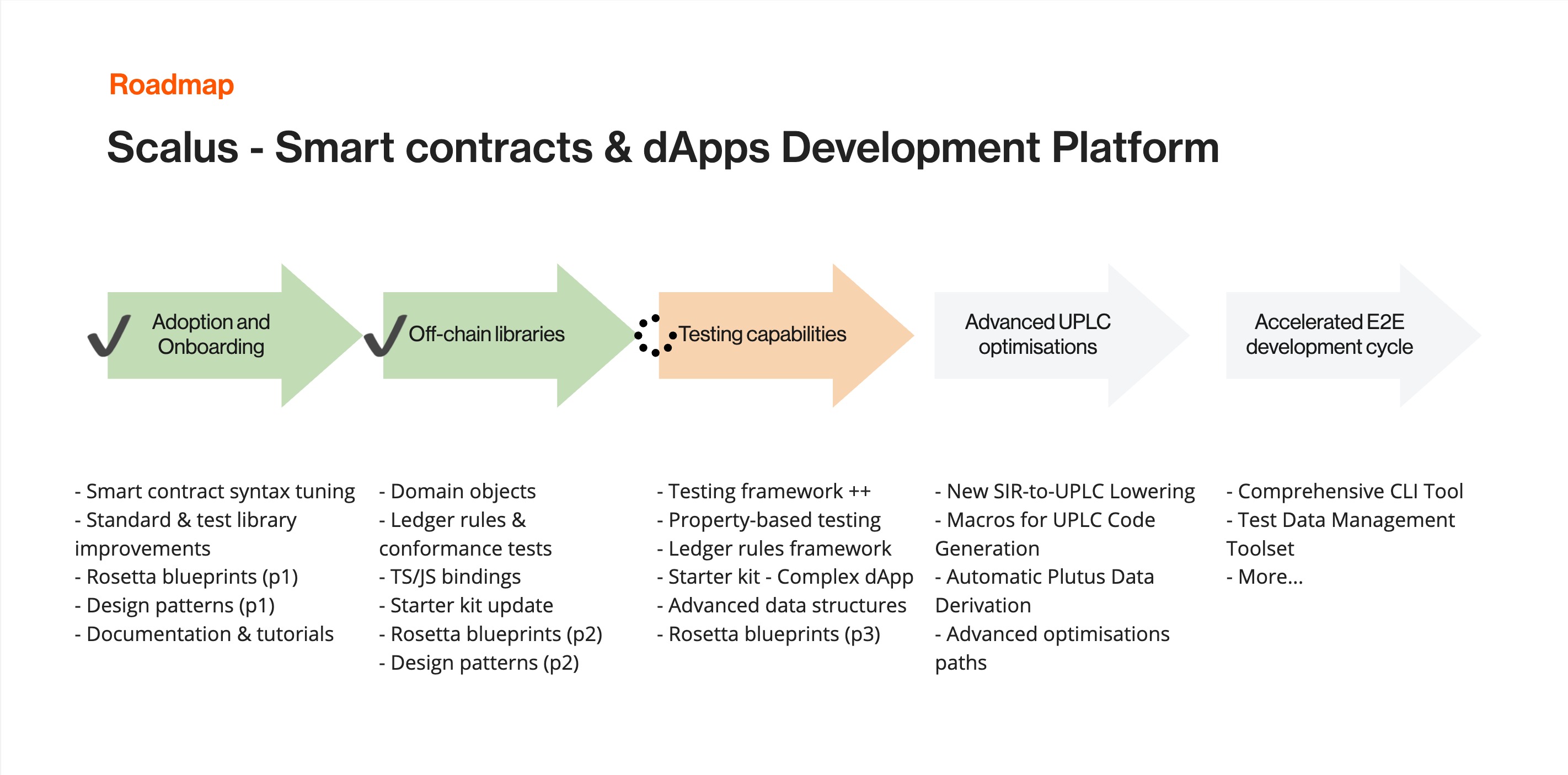
Milestone 3 focused on off-chain capabilities and ecosystem integrations — turning Scalus into a production-ready full-stack platform with a transaction builder, starter kit, and deep integrations with leading Cardano developer tools.
What We Delivered
Production-Ready Transaction Builder
Scalus now includes a complete transaction builder covering the full range of Cardano operations. We published detailed documentation on how to construct transactions off-chain:
- Transaction Building — core concepts and workflow
- Building Your First Transaction And detailed overview of Payment Methods, Spending UTxOs, Minting and Burning Native Tokens, Staking: Delegate to Stake Pool, Withdraw Rewards and Governance: Delegate to DRep, Vote.

Multiplatform Off-Chain Libraries
One of Scalus' key advantages is native support for JVM, JS/TS, and Native (LLVM) — no WASM, no intermediate solutions. The same code runs everywhere, cutting maintenance costs and ensuring consistency.
Read the Multiplatform Overview for details.
Ecosystem Integrations
We're actively collaborating with ecosystem partners to improve the overall Cardano developer experience.
Evolution SDK — JavaScript-based Plutus script evaluator using Scalus as an alternative to WASM-based evaluators. The scalus-uplc package is now available.
MeshJS — Scalus offline evaluator integrated as a native JS/TS alternative to WASM-based evaluators.
With Scalus in the stack, both Evolution SDK and MeshJS now evaluate Plutus scripts and estimate execution budgets natively in JS/TS — no WASM components needed, resulting in improved size/loading, simpler debugging, and no interoperability overhead.
DApp Starter Kit
We published the Scalus Starter — a ready-to-use template for scaffolding new DApps with on-chain and off-chain code, server-side components, and built-in testing.
The DApp Starter Tutorial guides developers through a structured onboarding flow: Run -> Understand -> Modify -> Deploy.

Yaci DevKit Integration
Yaci DevKit is a configurable local Cardano devnet running in Docker with full ledger validation and Plutus script execution — no testnet ADA, no network latency, no third-party API limits.
It complements the Scalus Emulator for scenarios requiring complete Cardano node semantics: real Haskell node implementation, actual block production, consensus timing, and the full ledger rule set. We delivered:
- Core testing infrastructure — container management, multi-party test setup, synchronous transaction submission
- Multi-environment test abstraction — same tests run on Emulator, Yaci, Preprod, and Mainnet
Design Patterns — Part 2
Implemented 3 additional patterns from the Anastasia Labs catalogue:
- UTxO Indexer - precomputes indexes in the redeemer, thereby enabling O(1) lookups and drastically reducing validation costs
- Merkelized Validators - allows to separate the logic (and code) of the complex validator across a number of scripts
- Parameter Validation - helps verifying the instantiations of parameterized scripts
New design pattern documentation is available at scalus.org/docs/design-patterns.
Rosetta Blueprints (part 2)
Delivered 7 additional common use cases — Auction, Crowdfunding, Lottery, Storage, Price Betting, Editable NFT, and Escrow. Each includes validators, transaction building logic, and tests.
The Payment Splitter blueprint was also updated with an optimised version reducing costs by 75%.
Intra-Era Hard Fork / Plutus Features
In preparation for the Q1 2026 hard fork, we shipped the first pack of new Plutus features and optimisations:
- New built-ins:
dropList,Array,multiIndexArray - Case analysis on
Bool,Int,List,Pair,Data - Plutus conformance v1.53.0.0
UPLC Conference & Performance
At UPLC Conf 2025, Alexander Nemish unveiled how Scalus' JIT-compiling Plutus on JVM creates the fastest UPLC evaluator to date — approximately 6x faster than the recent Haskell CEK machine. This opens new horizons for performance optimisations, particularly useful for Cardano L2 protocols and dApps.
Growing Adoption
The Scalus Club continues to grow — 30+ experienced Cardano developers meeting every 2-4 weeks for early feature access and direct input on the roadmap.
Recent sessions covered production transaction patterns:
Scalus is listed as one of the most actively developed projects on Cardano according to ADADEV.
Public releases:
- 0.14.2 (2025-12-31)
- 0.14.1 (2025-12-22)
- 0.14.0 (2025-12-19)
Complete changelog: GitHub
Why This Matters
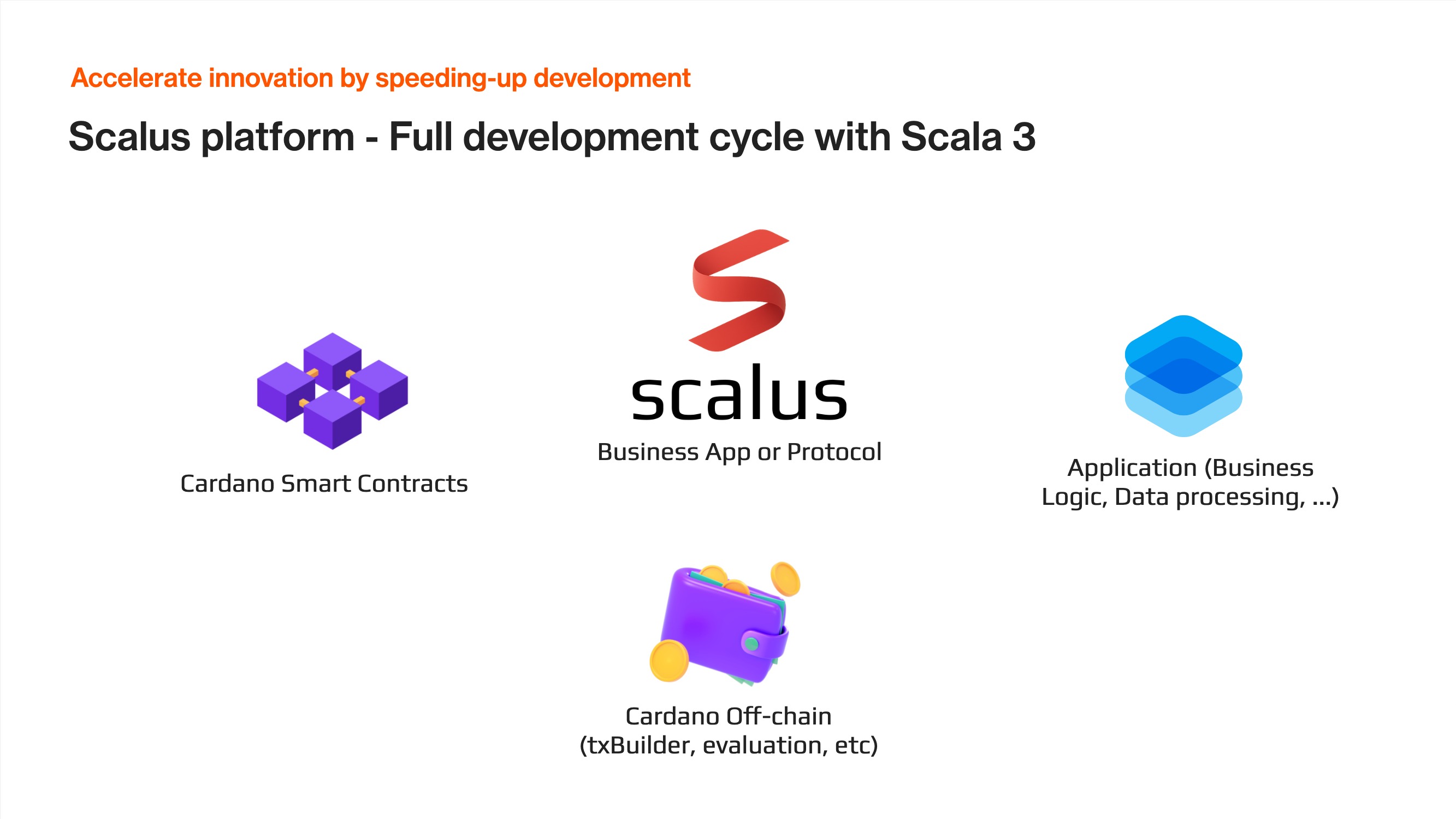
With Milestone 3, Scalus crosses the threshold from a smart contract compiler to a full-stack Cardano development platform. The production-ready transaction builder eliminates the need for juggling multiple off-chain tools, the ecosystem integrations bring Scalus' native performance to JS/TS developers, and the DApp starter kit means teams can go from zero to a working application in minutes.
The milestone was reviewed and approved by No Witness Labs as third-party assurer, confirming deliverables align with scope and demonstrating that Intersect's milestone-based funding model works.
Treasury reports can be found in the Intersect Treasury Dashboard.
What's Next
Milestone 4 will expand the Testing capabilities, in particular on the property based testing and local JVM / JS Emulator development, delivered the remaining Rosetta blueprints and design patterns, and focus on further ecosystem integrations and developer adoption.
Follow our progress on X (@Scalus3) and X (@lantr_io).
Join Scalus Club for early access and to shape the roadmap.
Questions or feedback? Reach out on Discord or email us at contact@lantr.io.


